Super Trouper | Stanley Picker Gallery
An evolving sound and sculptural-led project centred on the artistic practices of Nnena Kalu and Rebecca Kressley, organised by curator-researcher and facilitated by ActionSpace.
Between20 January and 28 March 2026 at Stanley Picker Gallery, Super Trouper unfolded across the gallery’s ten-week experimental residency programme Attack Decay Sustain Release: Experiments in Sound with Sophie Huckfield, Nnena Kalu & Rebecca Kressley, Abbas Zahedi and more. Across the programme, artists occupied the gallery’s spaces to explore how sound influences and develops within artistic practices.
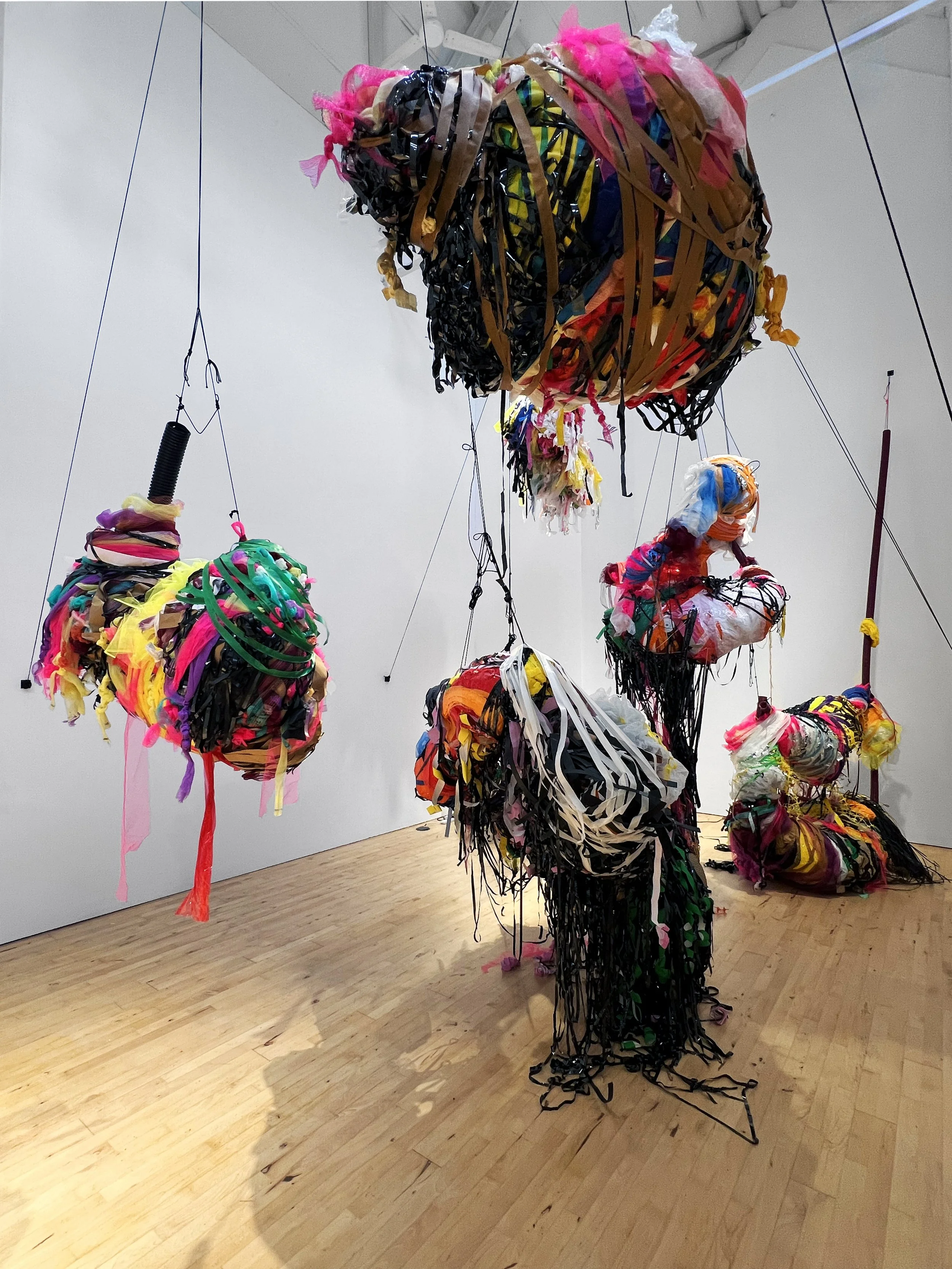
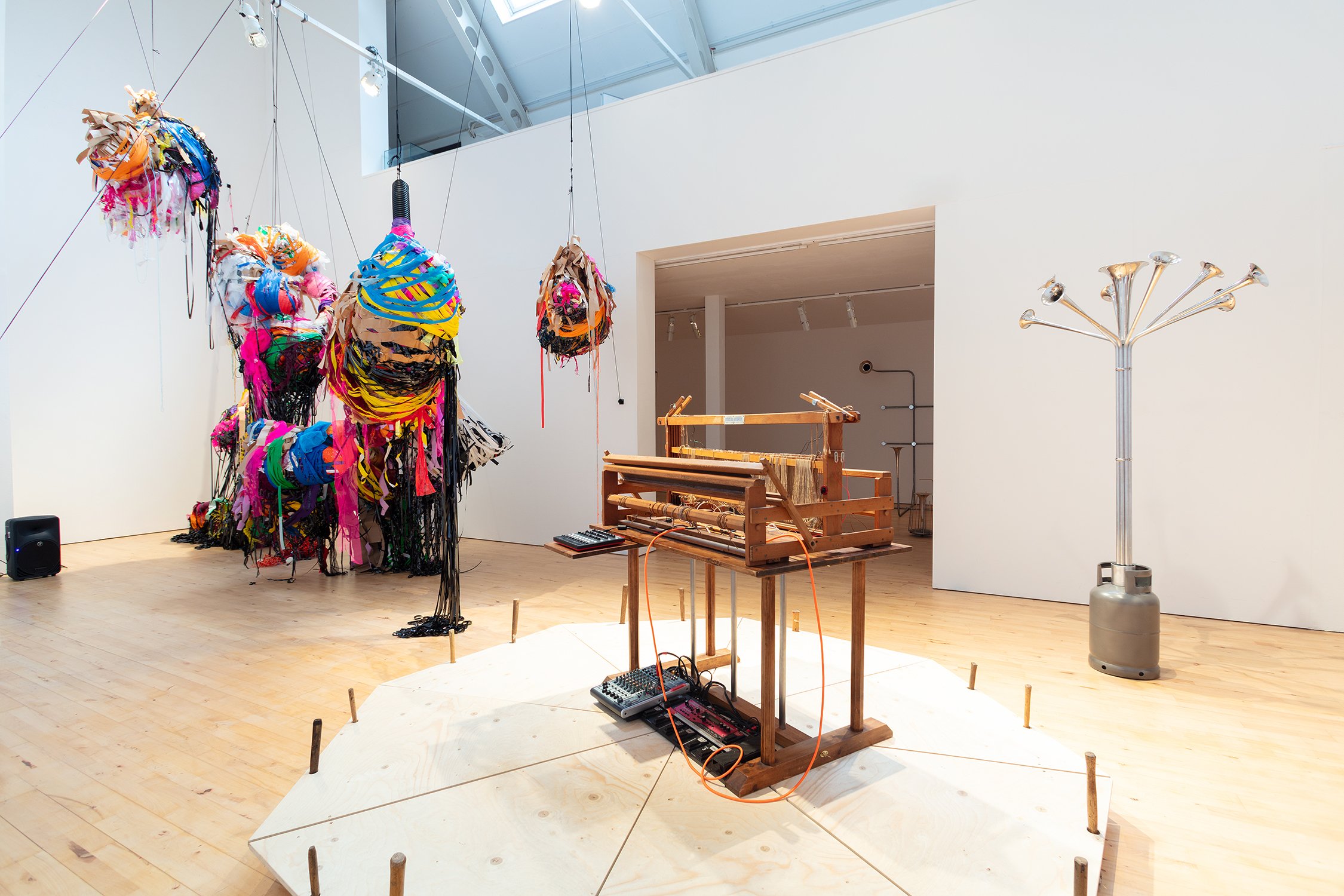
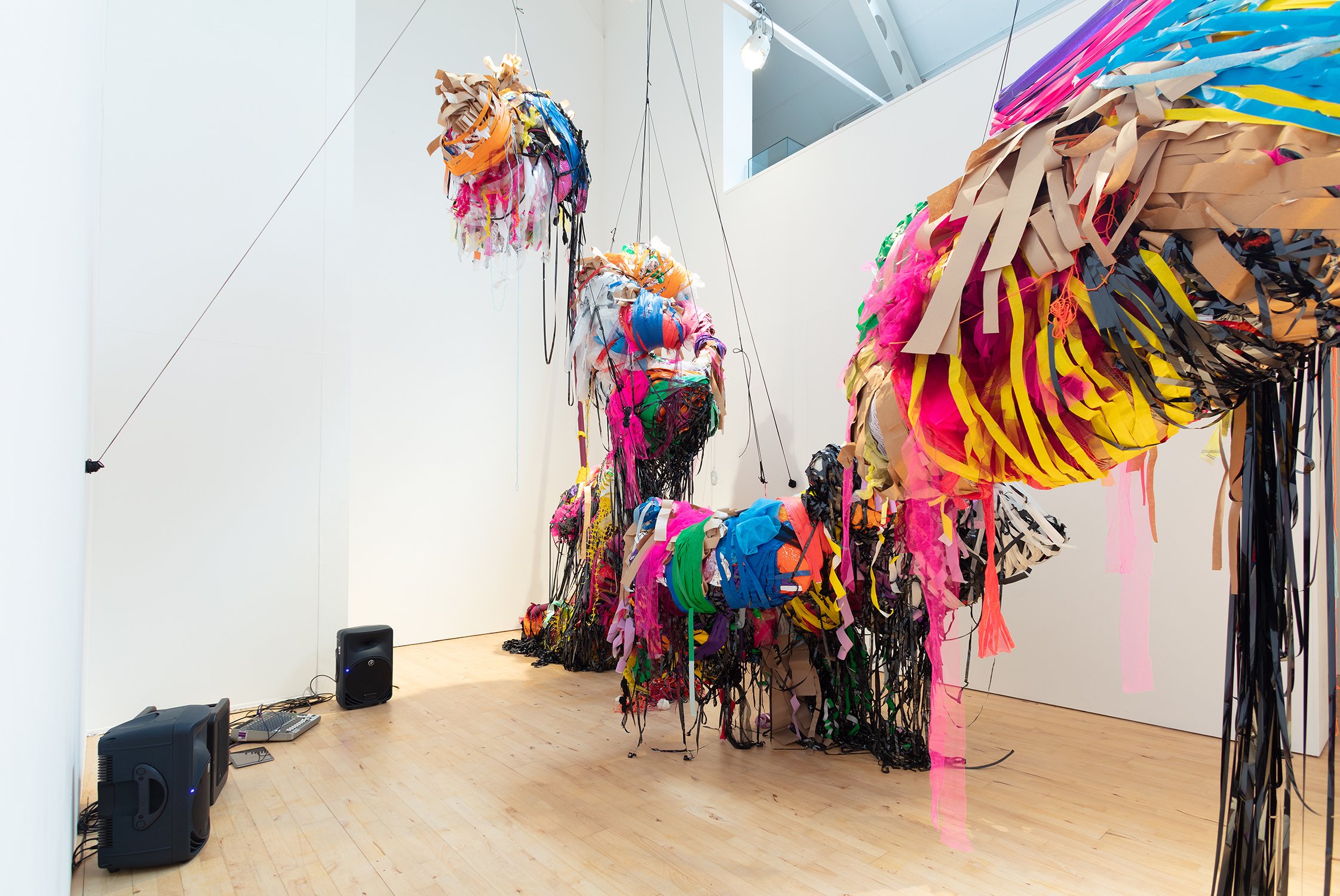
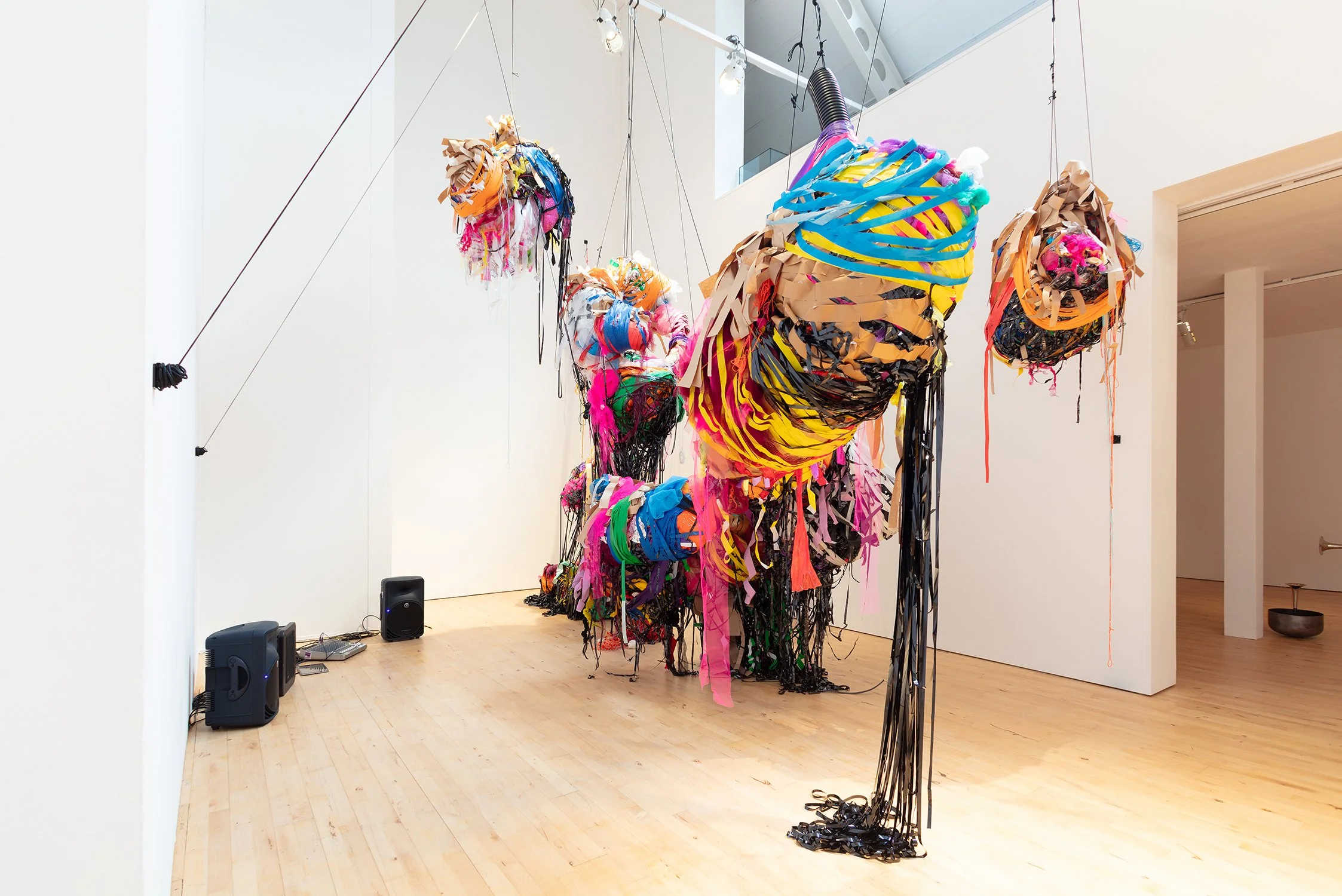
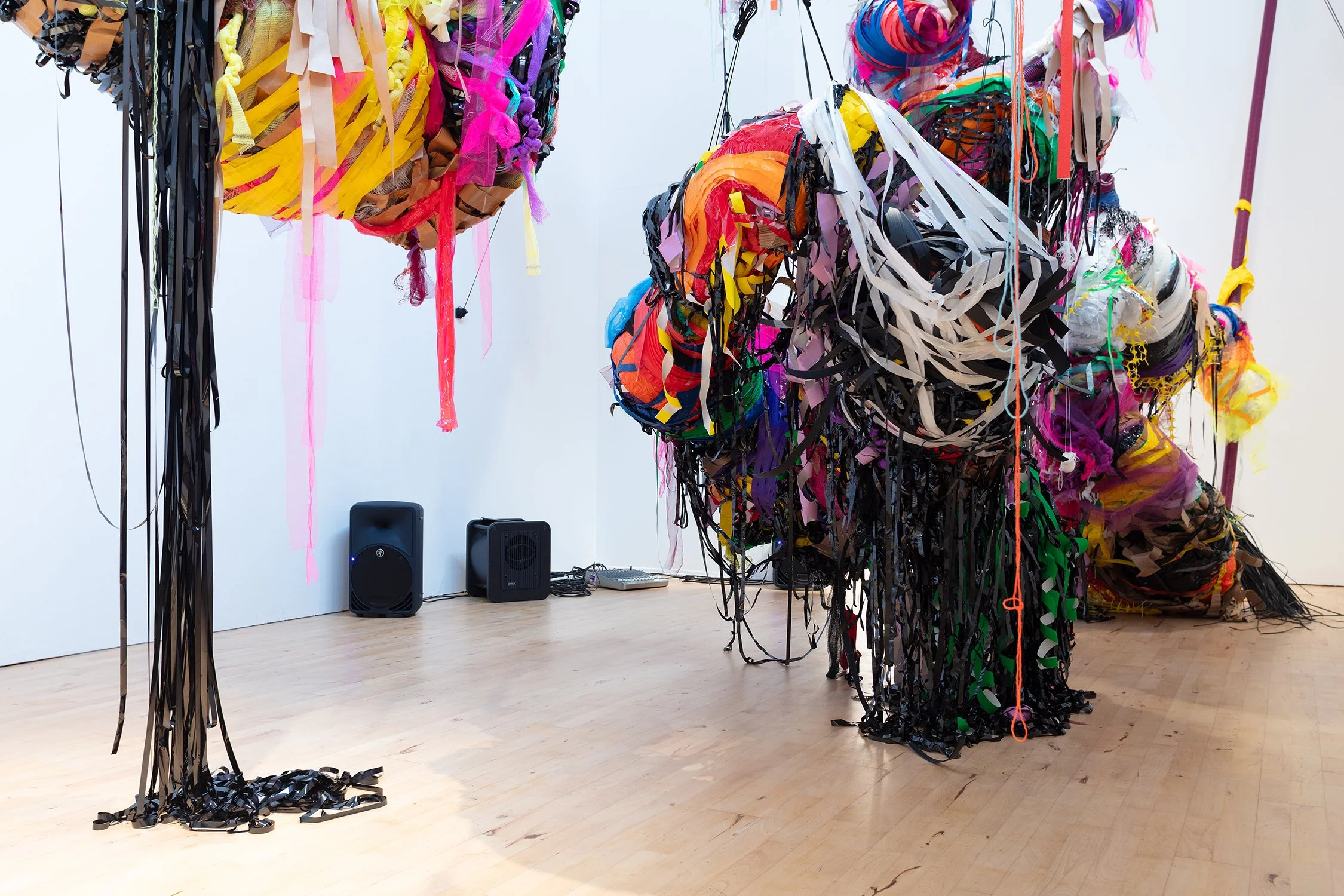
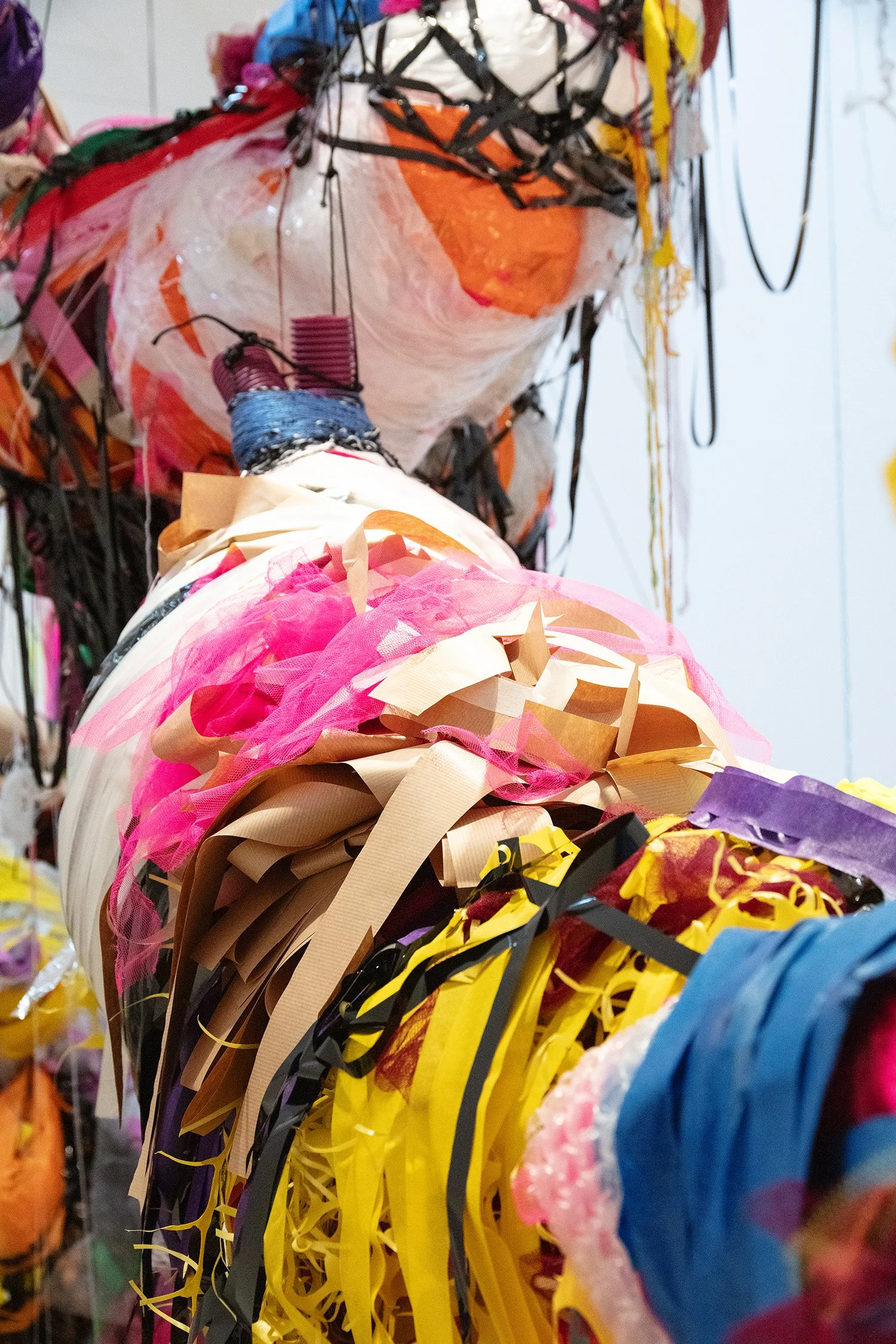
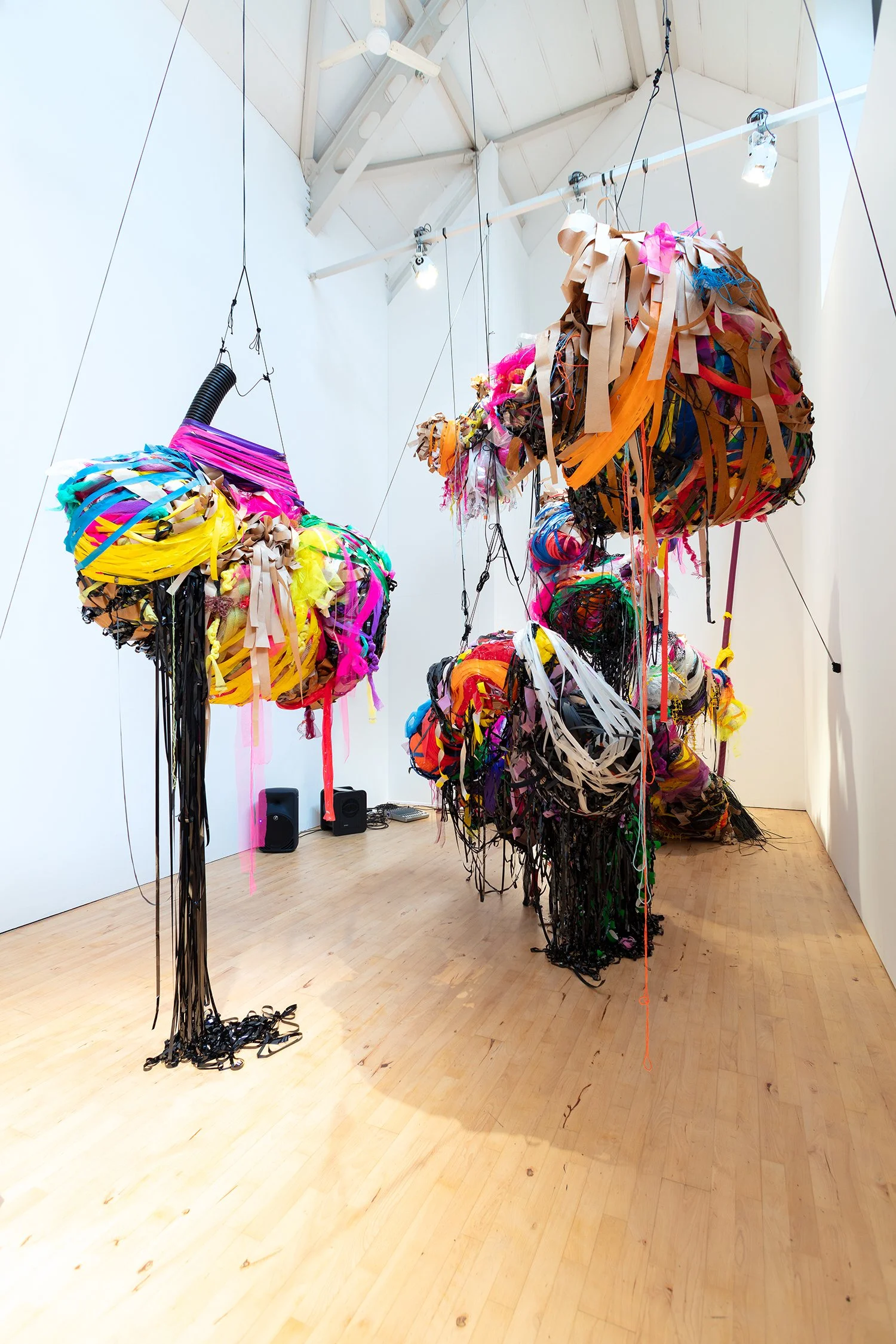
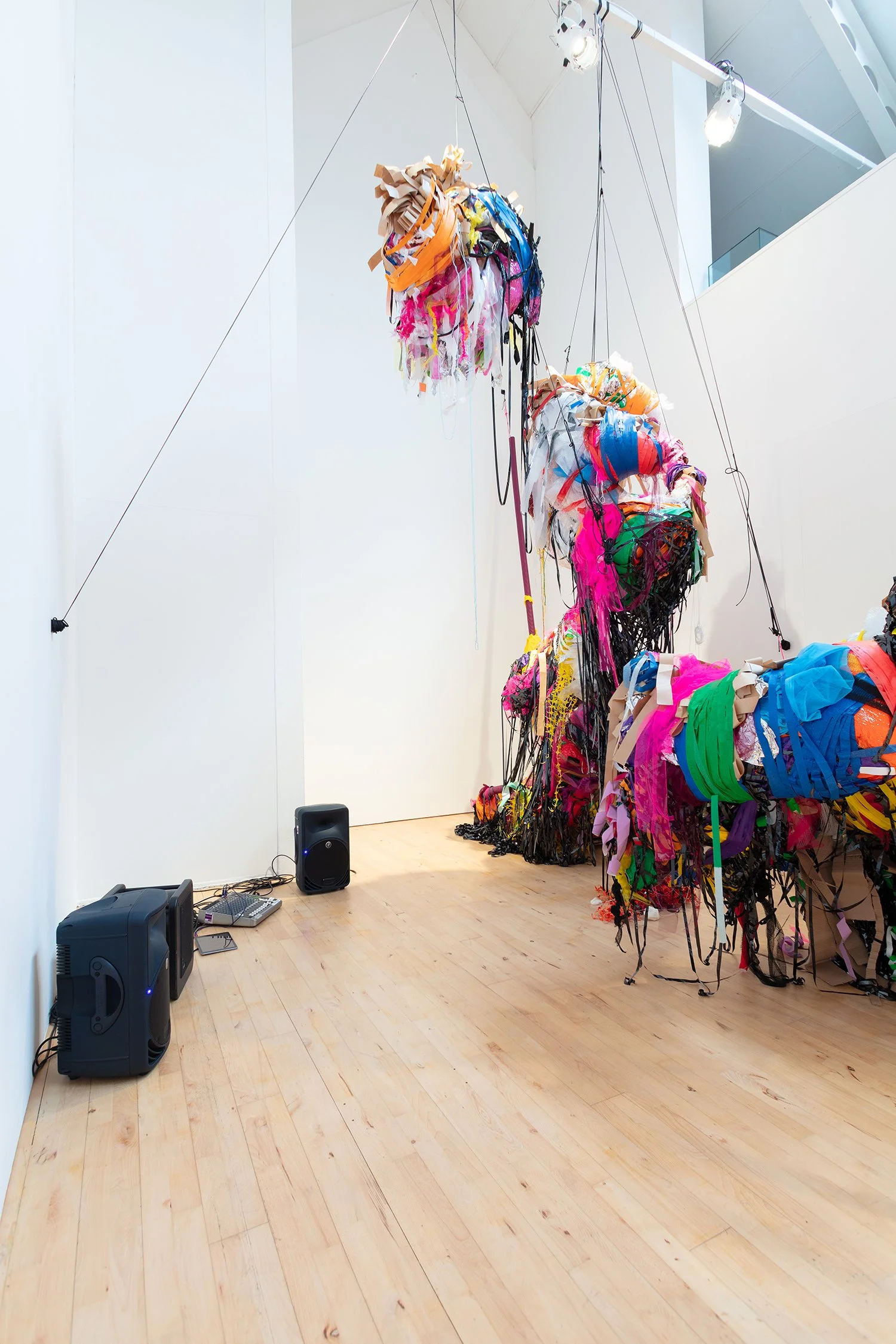
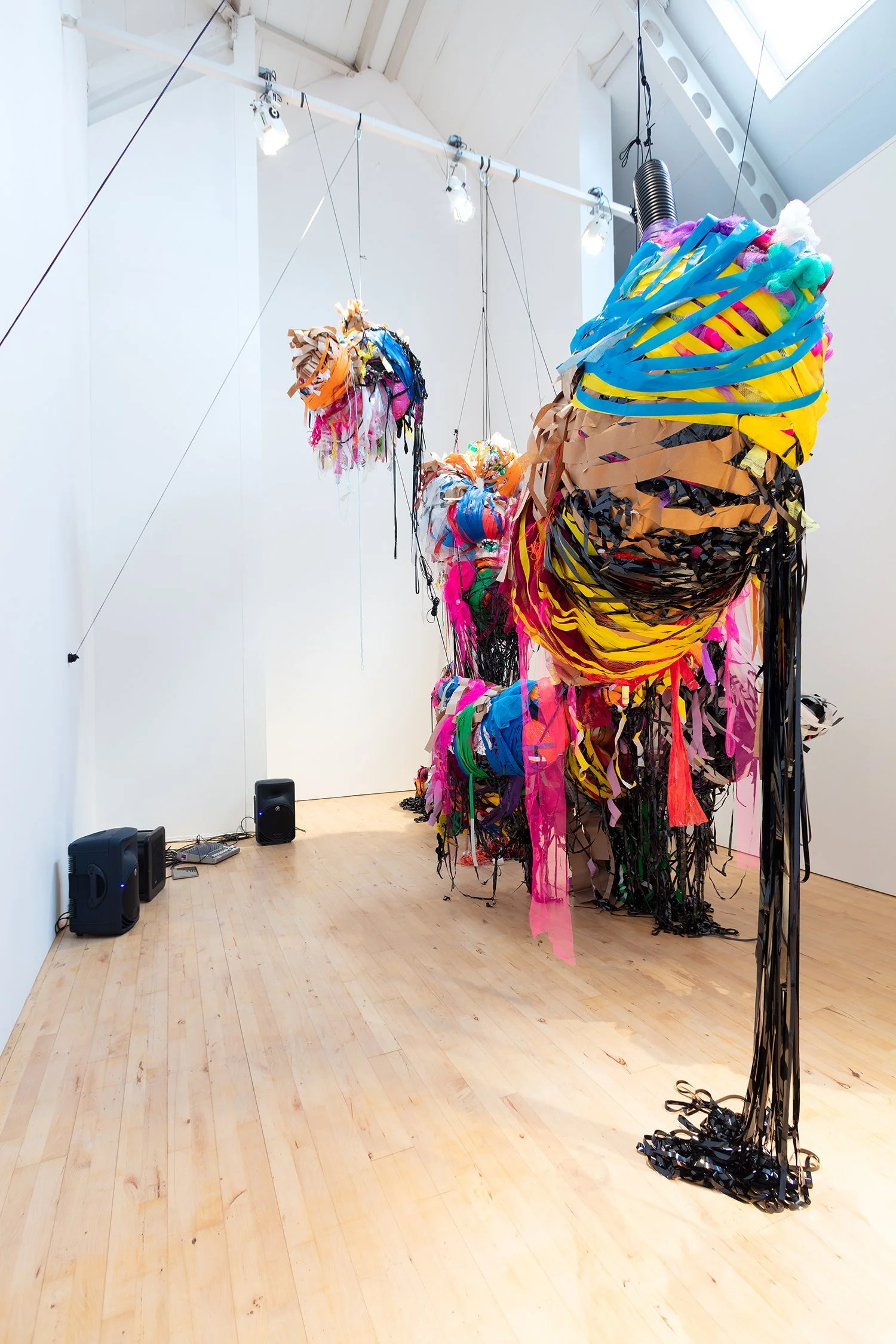
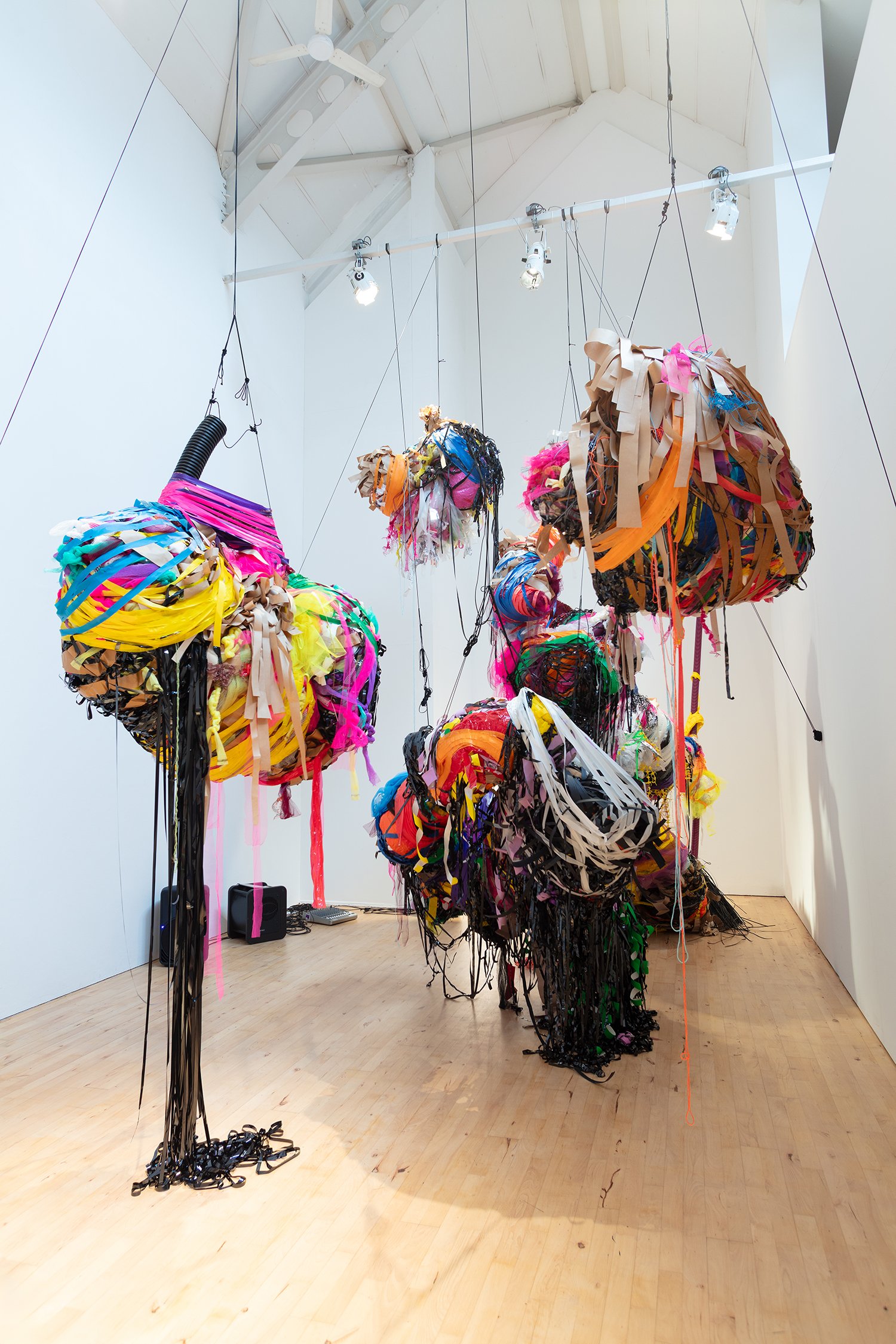
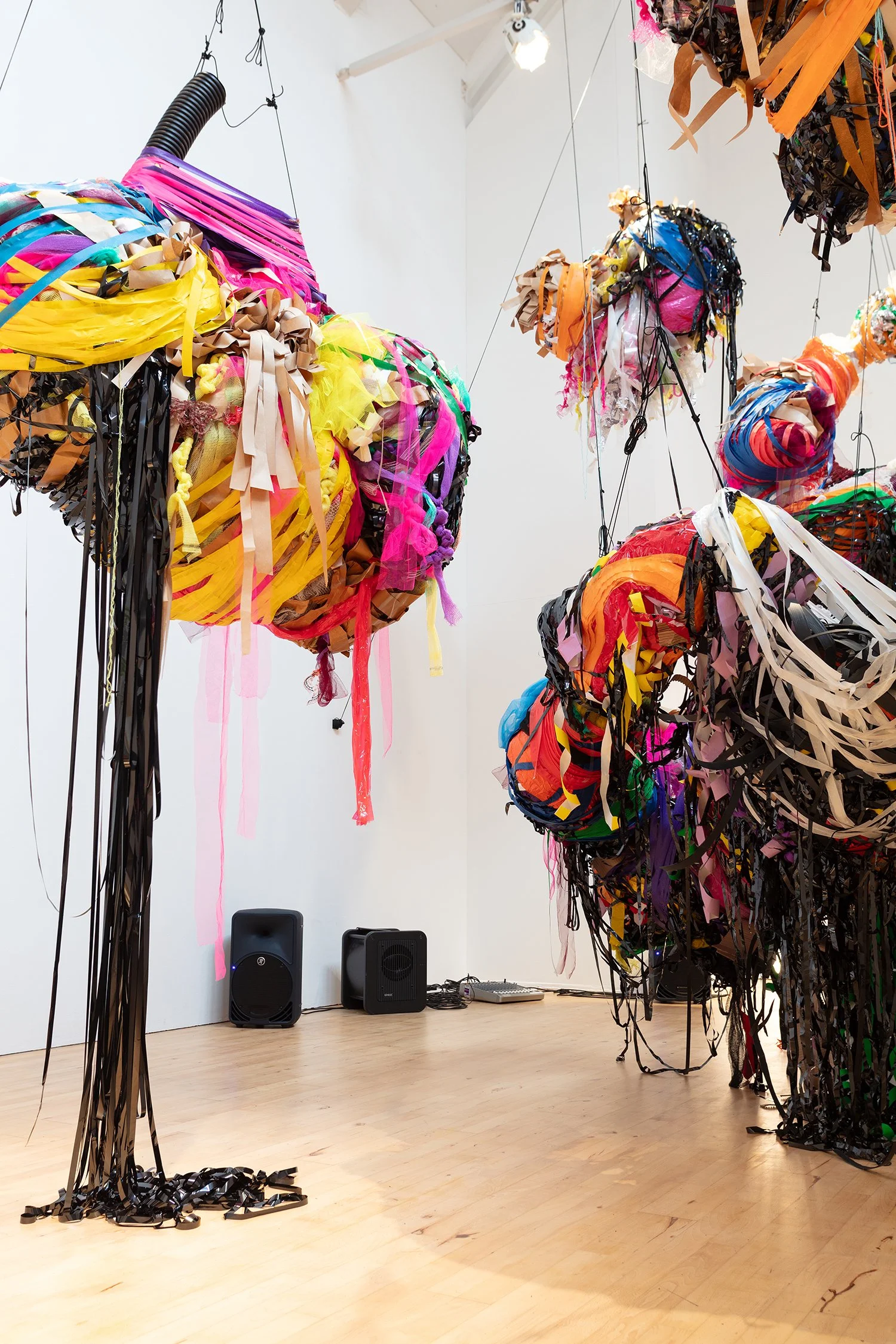
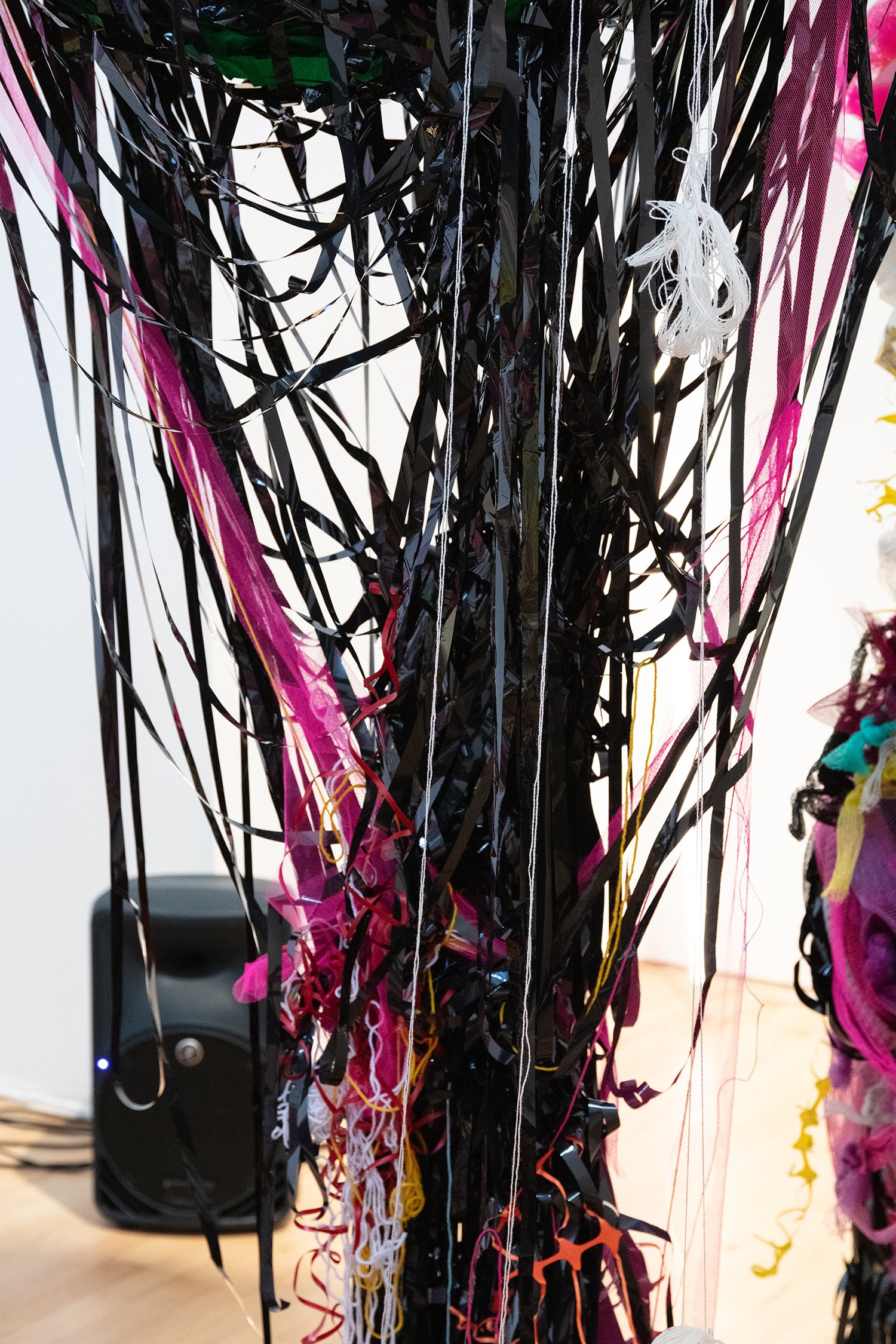
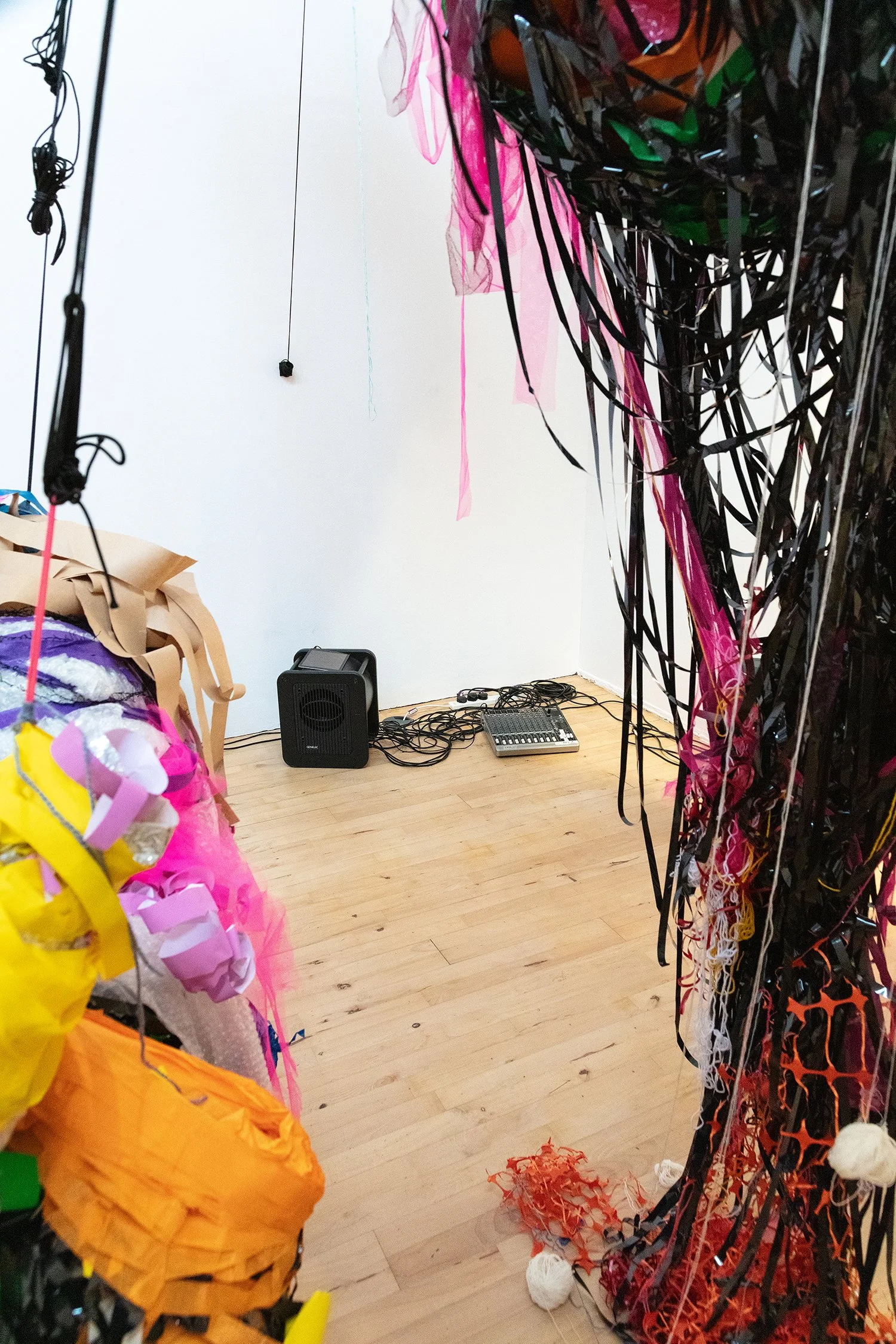
Below: Installation images of Super Trouper: Nnena Kalu and Rebecca Kressley as part of Attack Decay Sustain Release: Experiments in Sound at Stanley Picker Gallery, Kingston University London, 20 January - 28 March 2026. Photo credit Ellie Laycock.
Super Trouper: Locating Rhythm
by Lisa Slominski
Dancing is what we make of falling.
Music is what we make of music’s absence,
the real presence making music underneath.
— Fred Moten
Dancing and music, sound and movement – their presence, their absence, and the space in between – have, for me, emerged as central to what has become Super Trouper: a series of moments in which the artistic practices of Nnena Kalu and Rebecca Kressley come into proximity.
It is not a collaboration but a being alongside: as works, as practices, and as artists, with aims to develop without prescribed outcome or fixed conclusion. Its iteration at Stanley Picker Gallery has itself had iterations, shifting and evolving across the wider Attack Decay Sustain Release: Experiments in Sound programme. Versions of Kressley’s sound arrangements have been added over time, while Kalu has expanded her hanging sculptures, their heights and arrangements suspended at different levels depending on the day.
Being amongst Super Trouper at Stanley Picker Gallery and lingering in the in between – or perhaps in an altogether new space activated by Kressley’s sonic work and Kalu’s sculptural forms – I return to Moten’s words and the suggestion that rhythm, like music itself, emerges through presence and absence.
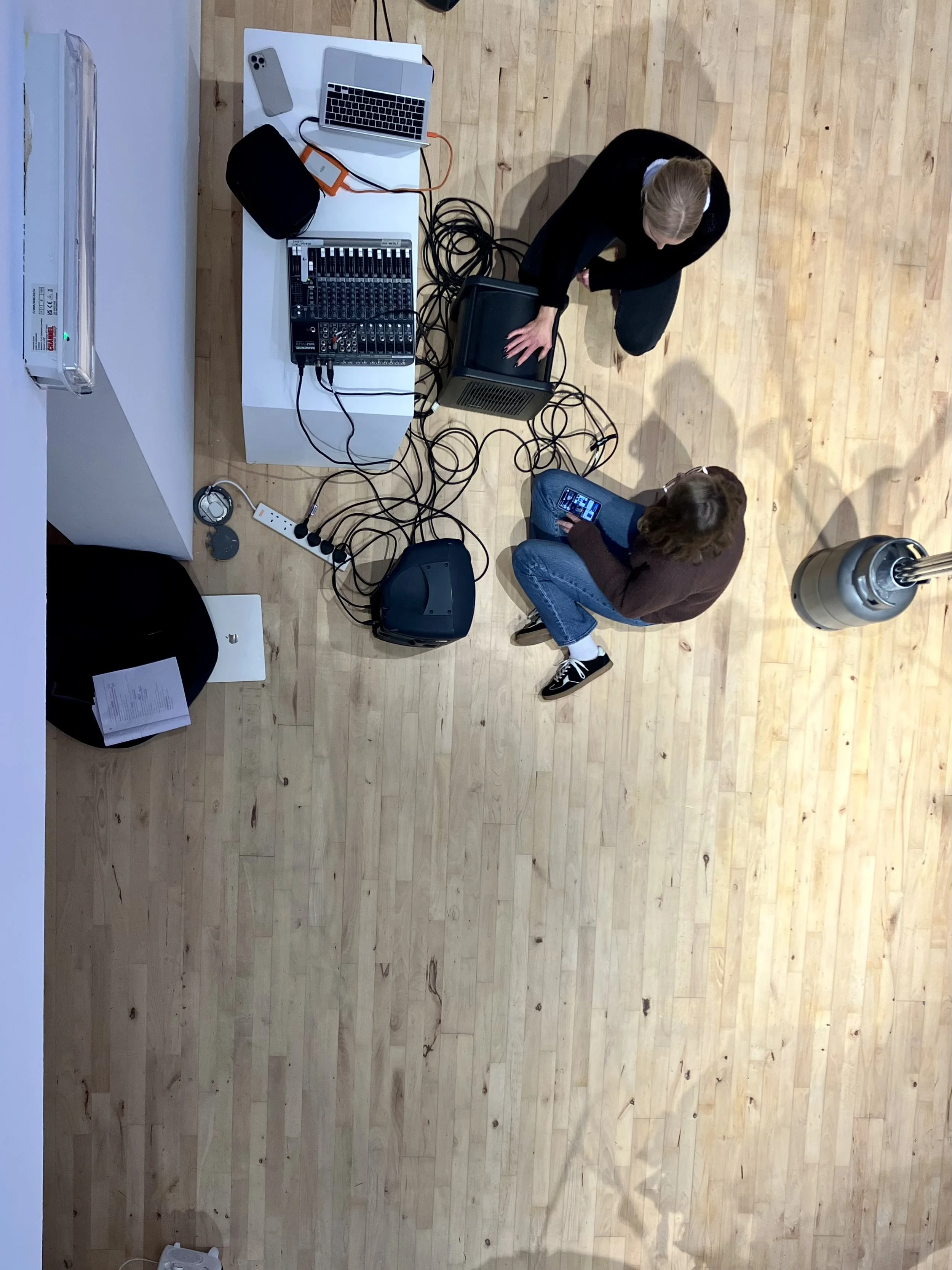
A melodic yet tentative saxophone plays through the speakers and begins to have an exchange with, and then be overtaken by, elements of Last Night a DJ Saved My Life (Indeep 1982). Across the track, brief moments of silence are also heard. Throughout Kressley’s sound work, collaborators playing and performing instruments often interact with pop songs. In this track, a saxophone played by Agata Smedzik feels improvisational and imperfect. In contrast, Kressley’s manipulations of Indeep feel deliberate and charged: surges of a beat, heightened lyrics that sound almost a cappella. Like extending one’s hand as an invitation to dance, these sounds – exuberant and precise yet unsettled – feel like a call and response with Kalu’s suspended forms.
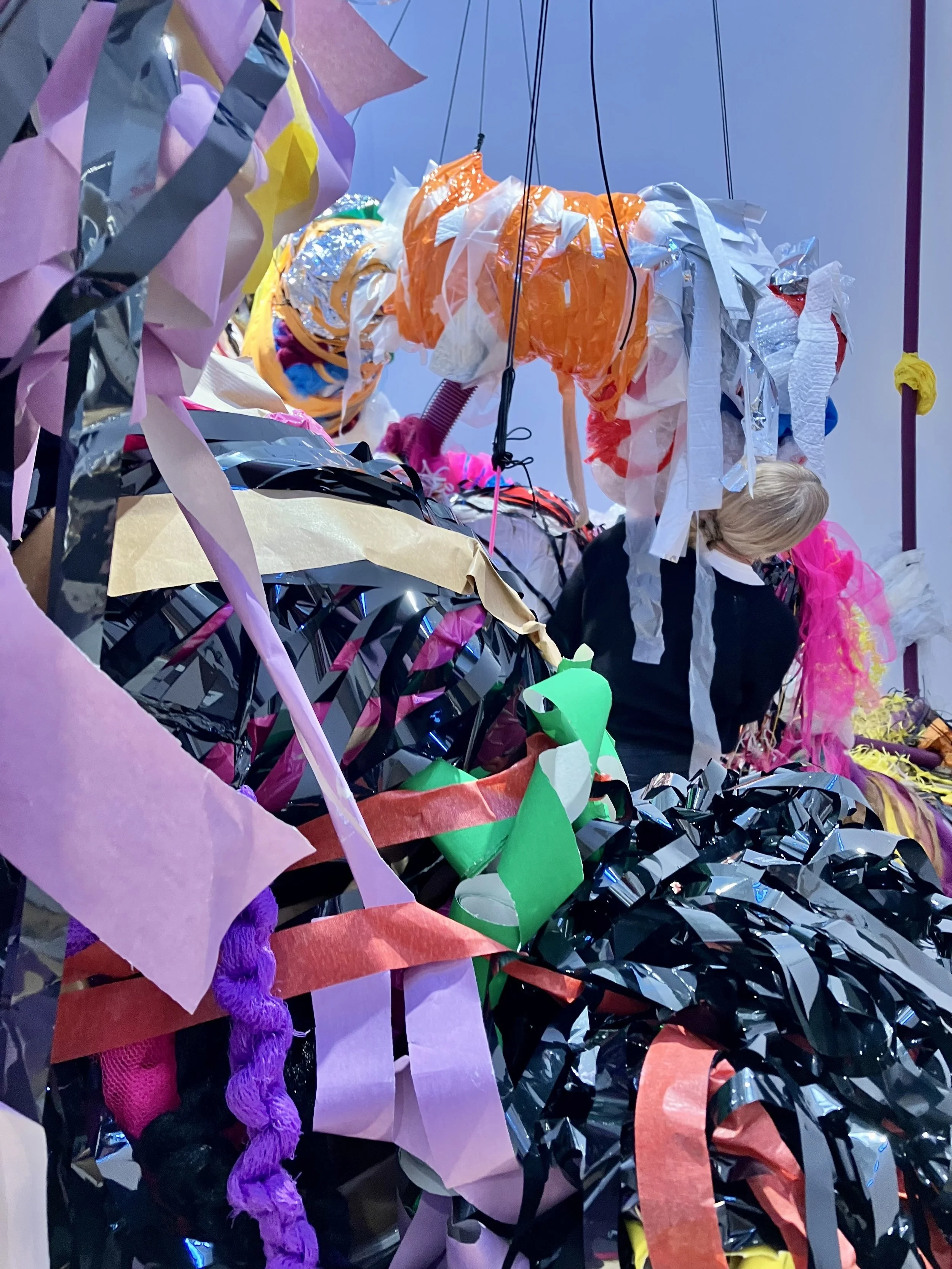
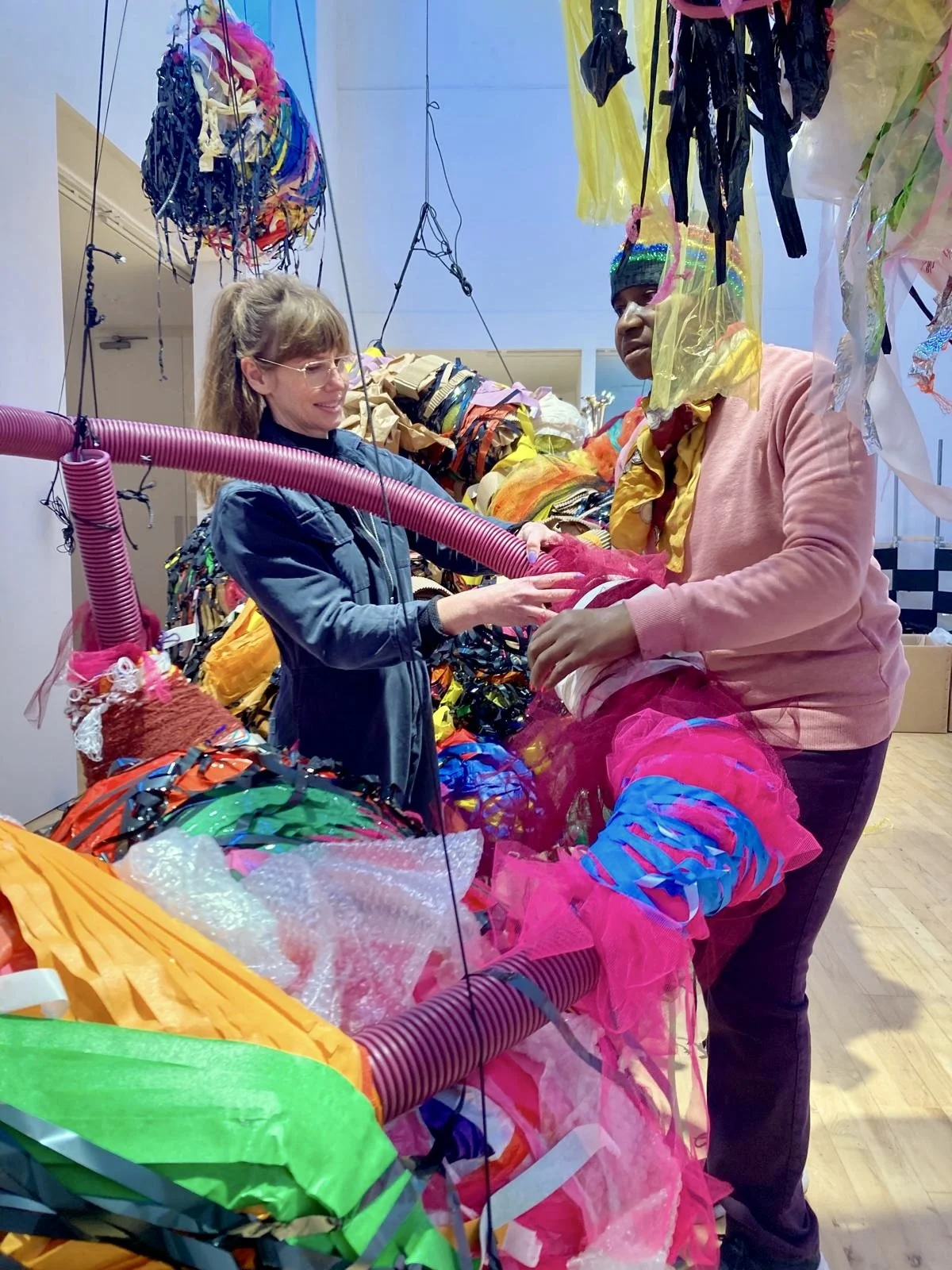
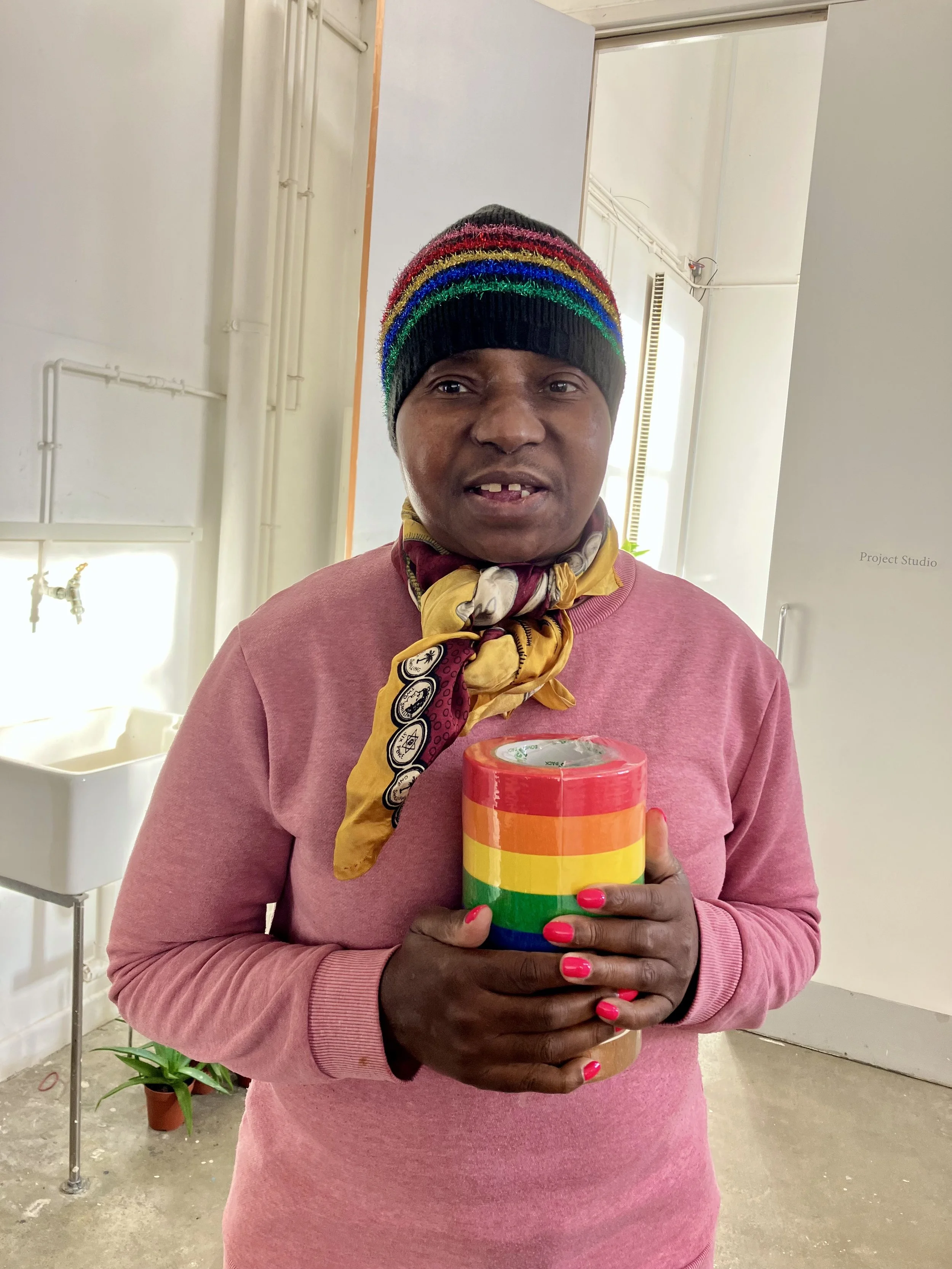
Those forms are a cacophony of shapes, textures and colour: materials built up decisively by Kalu through repetitive stacking, braiding, knotting and, most notably, wrapping. Tape, string, VHS tape, strips of fabric and cardboard become three-dimensional lines drawn materially. Having spent time connecting with Kalu on the dancefloor and knowing her routine of listening to songs by ABBA, the Bee Gees, and Diana Ross while working, I cannot help but sense the presence of her movement within the stillness of the sculptures. Activated by Kressley’s sound work, they hold a trace of her gestures: of moving from one structure to another, wrapping and binding in a rhythm of making.
There is an immediate joy in encountering Super Trouper and, as listening and looking continue, a profound resonance across the artists’ practices emerge. Repetition, layering, and mixing – whether through loops of audio, segments of lyrics, or layers of string, fabric, and VHS tape – are evident methods shared by both Kalu and Kressley. The time Kressley has spent alongside the cadence and pacing of Kalu’s making seems inherent and poignant in the rhythmic structuring of her sound.
Edits, in their respective practices, are less acts of subtraction than of accumulation: decisions about what to bring forward, what to obscure, and what to leave suspended in the background, shaping the rhythm of what emerges. In Kressley’s sound work, fragments of instrumental performances and songs surface and recede; verses partially revealed, beats built rhythmically through repetition and interruption. In Kalu’s sculptures, materials are similarly layered and wrapped over one another, often covering what lies beneath. In this sense, absence becomes generative in their processes. Elements become hidden or rendered invisible, yet they remain essential to the structure that holds the forms and arrangements together.
Kalu and Kressley each draw attention to what is present and what is withheld. Familiar sounds and materials appear in unfamiliar sequences. I recognise verses and beats, but they arrive unexpectedly. The sculptures are composed of recognisable materials that become uncannily transformed through repetition and accumulation. Where Kressley’s moments of silence and sonic editing recalibrate our listening, the occasional sway or rotation of Kalu’s otherwise static sculptures reorient our seeing.
In Super Trouper, rhythm emerges not from resolution but from accumulation: sounds, materials, gestures, and fragments gathering in space. Between Kressley’s sound and Kalu’s forms, a kind of choreography unfolds – one that exists somewhere between movement and stillness, presence and absence, music and its echo. Perhaps this is where Moten’s idea of falling returns: not as collapse, but as a generative moment; a rhythm found in the space between practices, where sound and sculpture meet, pause, and begin again.
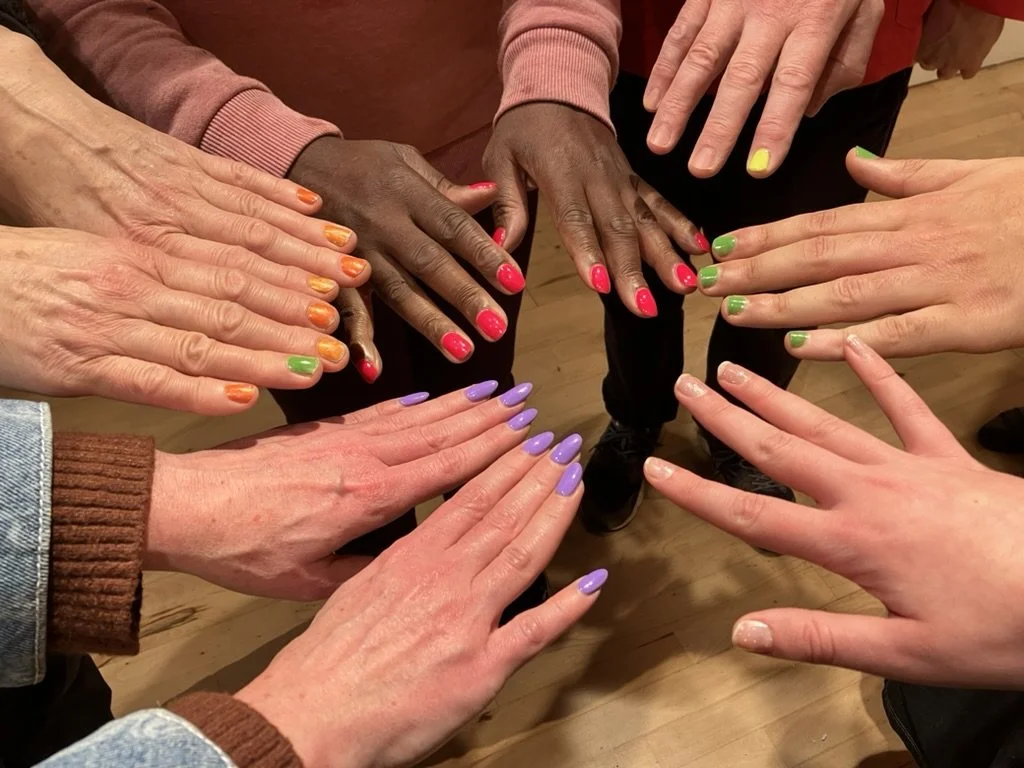
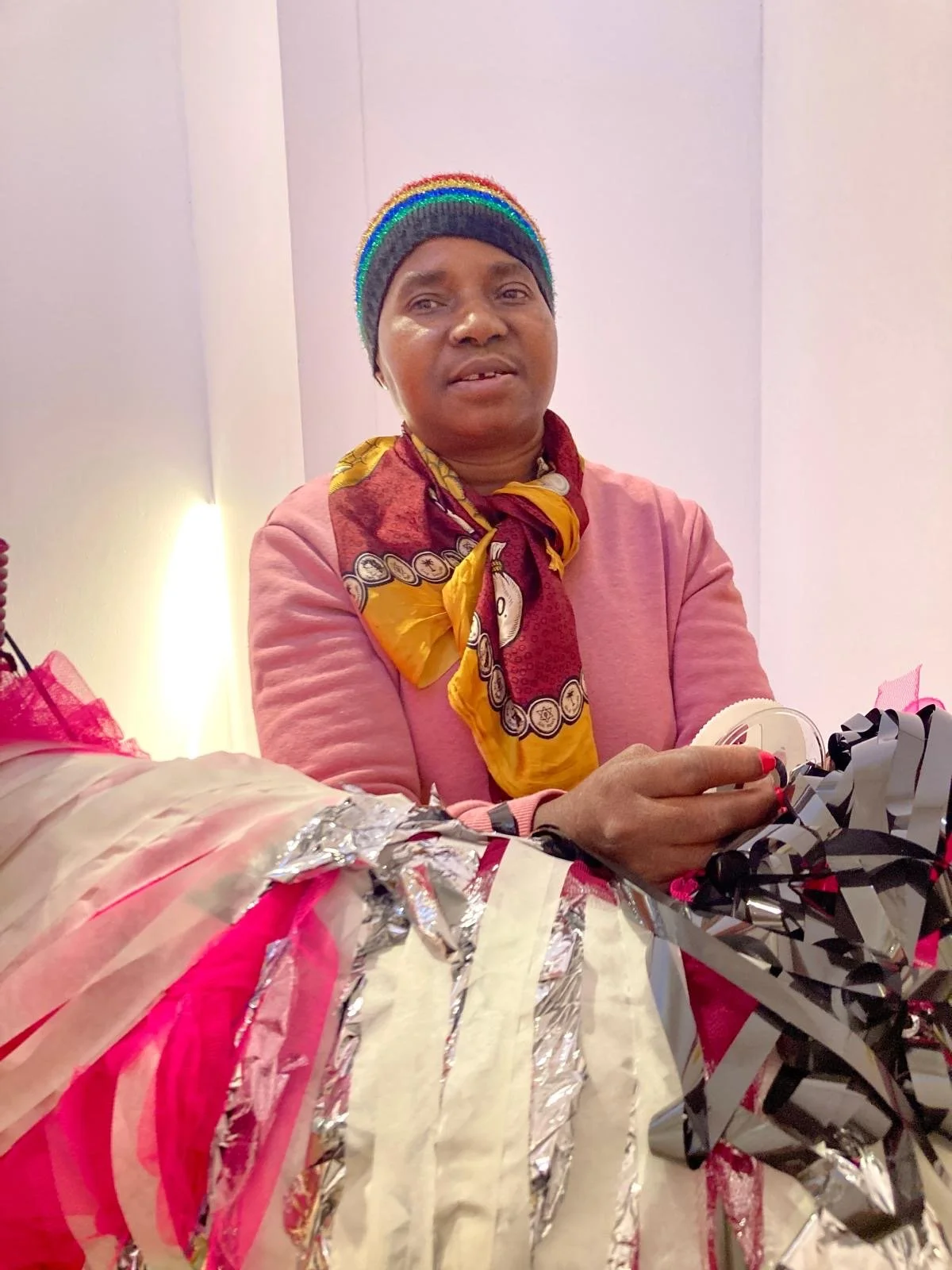
Below: Documentation of residency weeks of Super Trouper: Nnena Kalu and Rebecca Kressley as part of Attack Decay Sustain Release: Experiments in Sound at Stanley Picker Gallery, Kingston University London, 20 January - 28 March 2026.